The Beginner's Roadmap to Digital Marketing: Where to Start When Everything Feels Overwhelming
VKVIKASH KUMAR JAIN · July 24, 2026 · 5 min read
Every beginner I talk to hits the same wall. They open a browser, search "how to learn digital marketing," and within twenty minutes they're drowning in tabs — SEO guides, Google Ads tutorials, Instagram strategies, TikTok growth hacks, email sequences, landing page builders, analytics dashboards. The noise is deafening.
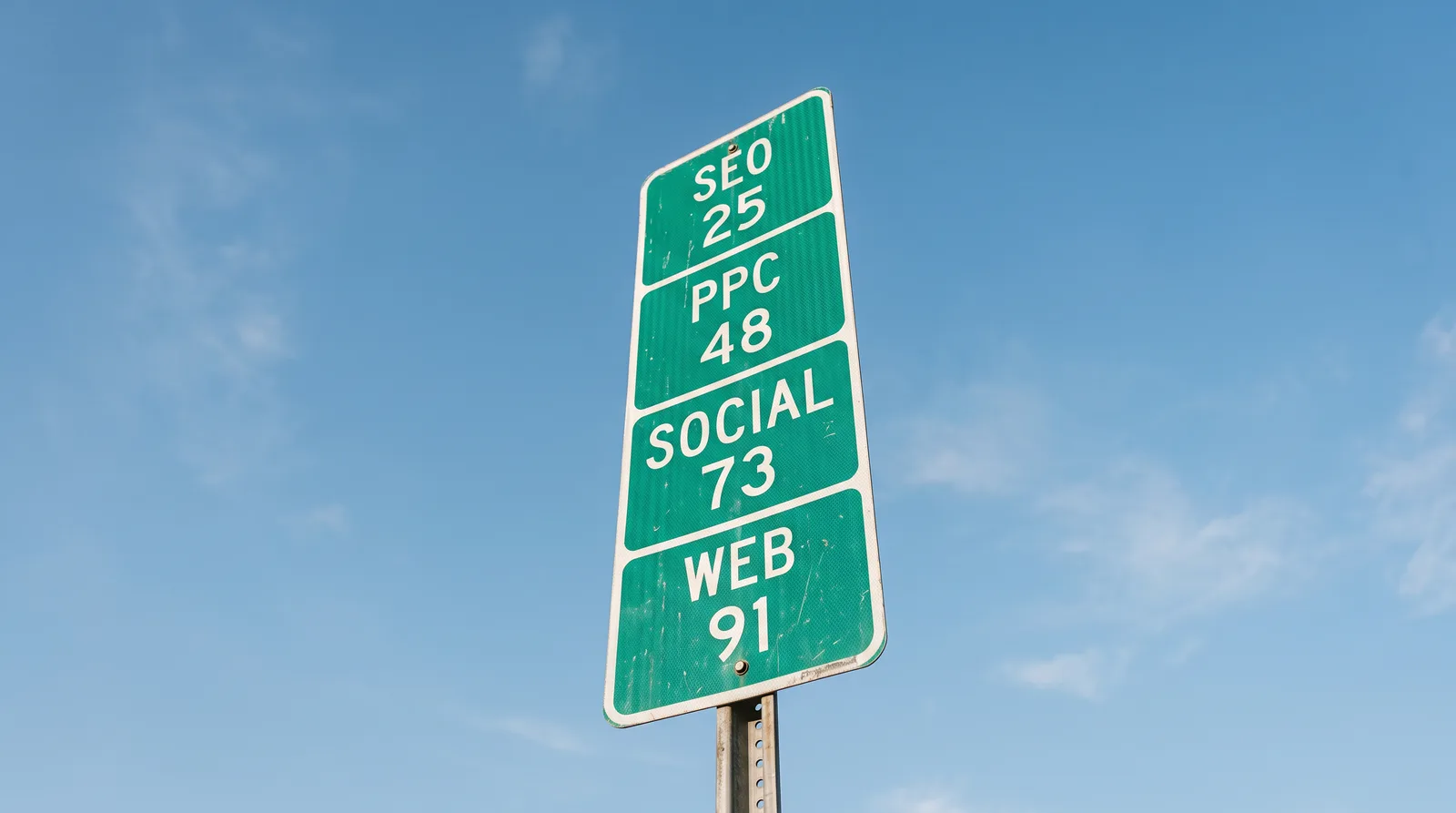
Here's the truth nobody says loudly enough: trying to learn everything at once guarantees you'll master nothing. Digital marketing is not a single skill. It's four distinct disciplines — SEO, PPC, Social Media, and Web Development — each with its own logic, vocabulary, and feedback loop. The fastest path through all four is a sequential one.
This post gives you that sequence. Follow it for 90 days and you'll finish with a real foundation, not just a browser full of half-watched YouTube videos.
Why SEO Comes First
Search Engine Optimization is the right starting point for one reason above all others: it teaches you how people actually think when they need something.
When you do keyword research, you're not guessing at what your audience wants — you're reading the literal words they type into a search bar. That skill — understanding search intent — carries into every other channel you'll ever learn. It makes your ad copy sharper. It makes your social content more relevant. It makes your website pages convert better.
SEO also has the slowest feedback loop of any channel, which sounds like a disadvantage but is actually a gift for learners. Because results take weeks, you're forced to think strategically rather than react to yesterday's numbers. You build patience and process, two things that will serve you in every role you ever hold.
Your SEO focus for Days 1–30:
- Learn the difference between informational, navigational, and transactional search intent
- Install Google Search Console on any site you have access to (even a free one you build yourself)
- Pick one target keyword cluster — three to five related phrases — and write two pieces of content optimized around them
- Understand on-page basics: title tags, meta descriptions, H1 structure, and internal linking
Don't touch ads. Don't open Instagram Insights. Stay in this lane for 30 days.
Days 31–60: Layer in PPC
Once you understand what people are searching for, paid search (PPC) becomes logical rather than mysterious. Google Ads is essentially SEO with a credit card and a faster feedback loop — and that speed is exactly why you learn it second.
With PPC, you get data in days rather than months. You'll see which headlines get clicks, which landing pages convert, and which audiences don't care about your offer at all. That information is genuinely valuable, but only if you already know how to read search intent. Without your SEO foundation, you'll just be spending money on lessons you could have learned for free.
Your PPC focus for Days 31–60:
- Set up a Google Ads account and understand the campaign → ad group → keyword → ad structure
- Run a small Search campaign with a $5–$10/day budget (even a dummy campaign on a free product teaches you the interface)
- Learn the three match types: broad, phrase, and exact
- Read your Search Terms Report every single day — this is where real education lives
- Calculate a basic cost-per-click and cost-per-acquisition so the numbers stop feeling abstract
Days 61–90: Add Social Media and Web Fundamentals
By the time you reach day 61, you understand what your audience wants (SEO) and how they respond to direct messaging (PPC). Now social media finally makes sense — because you're not just posting content, you're using a distribution channel with a known audience to create demand and build trust.
Social media is where you play the long game on brand. It rewards consistency and personality over perfection. Pick one platform that matches your target audience and publish there only.
Alongside social, spend time in these final 30 days getting comfortable with basic web fundamentals — not coding, but the logic. Understand why page load speed affects both SEO rankings and Google Ads Quality Scores. Learn what a conversion is and how to track one. Know the difference between a landing page and a homepage, and why that distinction costs businesses thousands of dollars a year when they get it wrong.
Your Days 61–90 checklist:
- Choose one social platform and publish three times a week with a consistent format
- Connect Google Analytics 4 to any site you're working with
- Set up one conversion goal and verify it fires correctly
- Audit one webpage for load speed using Google PageSpeed Insights and fix the top recommendation
The Bigger Picture
At the end of 90 days you won't be an expert — and that's fine. What you will be is oriented. You'll know the vocabulary, the logic connecting each channel, and — crucially — which one to focus on for a given business goal.
That's the skill that separates people who dabble in digital marketing from people who get hired, promoted, or paid to run it.
The four pillars of SEO, PPC, Social Media, and Web aren't enemies competing for your attention. They're a system. But every system has a starting point. Now you know yours.
If you want to go deeper on any one of these pillars with structured lessons, frameworks, and real tools — that's exactly what the Digital Marketing Hub is built for.

Want to go deeper than a blog post?
Digital Marketing Hub
Master the four pillars of digital marketing — SEO, PPC, Social Media, and Web Development — and learn how to use each service strategically to grow any business online. No fluff, just the real skills that agencies charge thousands for.
Start learning — $59/mo